On Tuesday, a federal judge ordered the US Department of Agriculture to halt its planned reorganization that includes sweeping changes to the US Forest Service.
Judge Vince Chhabria of the Northern District of California granted a stay that had been requested by a coalition of labor unions, nonprofit organizations, and state and local government agencies, led by the American Federation of Government Employees and the American Federation of Labor and Congress of Industrial Organization (AFL-CIO), which are suing over the USDA’s attempt to shutter offices and relocate thousands of employees. The unions and their partners argue that federal law prohibits the USDA from repurposing money appropriated by Congress on the reorganization.
Court documents note that the USDA has already begun reorganizing the Forest Service as well as the Food and Nutrition Administration, Foreign Agricultural Service, Rural Development agency, Farm Preservation and Conservation agency, Office of General Counsel, Office of the Assistant Secretary for Civil Rights, and Research, Education, and Economics agency.
The USFS oversees 193 million acres of forests and grasslands. The USDA plans to move the USFS headquarters from Washington, D.C., to Salt Lake City, Utah, close at least 23 research facilities, consolidate the agency’s research in Fort Collins, Colorado, close all nine of the service’s regional offices, and establish four regional hubs and 15 state-based offices.
The Forest Service has said that it is cutting costs and transitioning to a state-based leadership model, with a network of service centers and a unified research program. The agency has said in press releases that no staff would be fired, but the agency has already slashed thousands of jobs through the 2025 deferred resignation program.
In the wake of those resignations, the USFS has said that many of the research facilities that it has evaluated for closure were understaffed or unstaffed.
In Tuesday’s ruling, Chhabria said that the USDA is almost certainly repurposing approved funding to shut down offices and relocate employees, despite restrictions that were enacted by Congress to prevent such repurposing. Congress rejected budget cuts that the USDA had proposed for FY2026, instead increasing its funding year over year, and it specified that the USDA was prohibited from “reprogramming” funds for reorganization without approval from the House and Senate appropriations committees.
The judge said in his ruling that it is “overwhelmingly likely” that the USDA’s plans to close offices and relocate employees violate Congress’ express restrictions on those activities. USDA officials countered that they had notified Congress about the USFS reorganization although the appropriations committees have not approved the changes, the ruling states.
Meanwhile, the USFS has notified more than 6,000 employees that they were being considered for mandatory relocation. The USDA clarified, though, that it estimates no more than 250 USFS employees will be relocated beyond their current “commuting area.”
“Although it’s unclear how many employees USDA plans to actually relocate, if the relocations are allowed to proceed, it’s likely that many affected employees will decline to move and will instead leave the Forest Service,” the judge wrote.
Data from the 2019 reorganization of the Bureau of Land Management supports that assertion. The US Government Accountability Office reported in 2020 that 81 percent of employees who were reassigned from Washington, D.C., to Grand Junction, Colorado, declined the transfer.
Chhabria said that the public interest is served by preventing the executive branch from spending money on activities that Congress has prohibited as well as by avoiding the risk that the reorganization could disrupt vital programs, including the prevention and fighting of wildfires.
For now, Tuesday’s ruling forbids the USFS from closing or eliminating offices as well as relocating or reassigning employees to offices that are beyond a reasonable commuting distance.
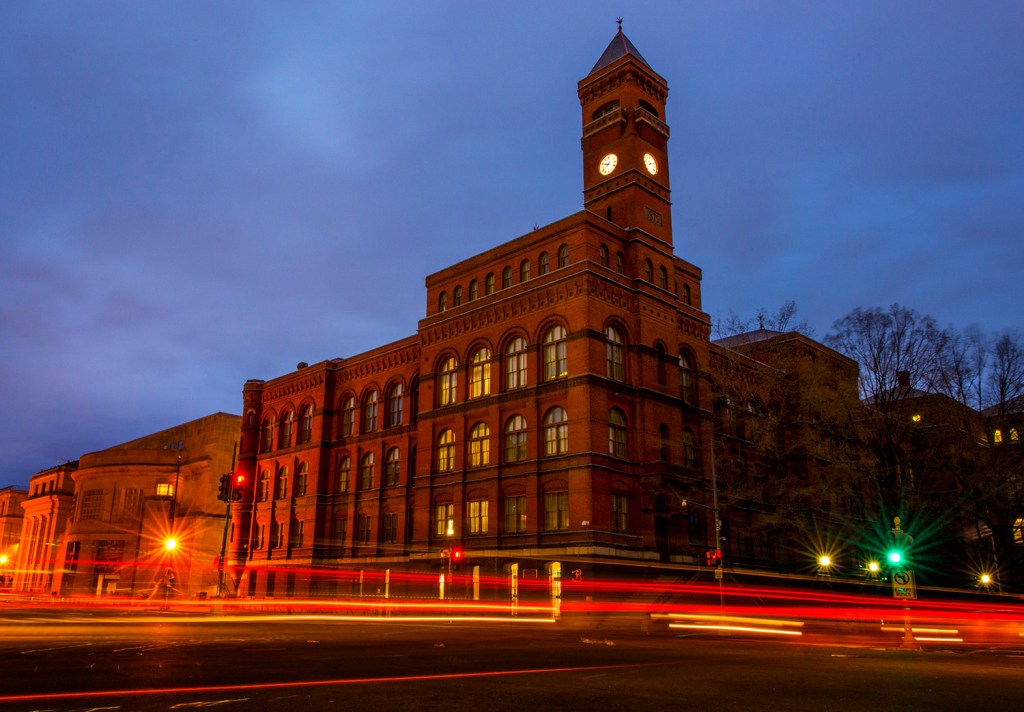
The US Forest Service headquarters is currently in the Sidney R. Yates Building in Washington, D.C./Photo courtesy of the USFS