An expanse of towering volcanic rock spires in southern Arizona is likely to become the 64th US National Park.
A bill awaiting the president’s signature would redesignate Chiricahua National Monument as a national park, adding to the park system the “Wonderland of Rocks” that President Calvin Coolidge had designated as a national monument in 1924 to protect it for future generations.
The 12,000-acre desert and mountain park would be one of the smallest under the care of the NPS, and its 70,000 visitors in each of the past two years would also make it one of the least visited. However, the redesignation is expected to draw larger crowds to the park.
Chiricahua would be the first national park established since 2020, following the addition of New River Gorge in West Virginia.
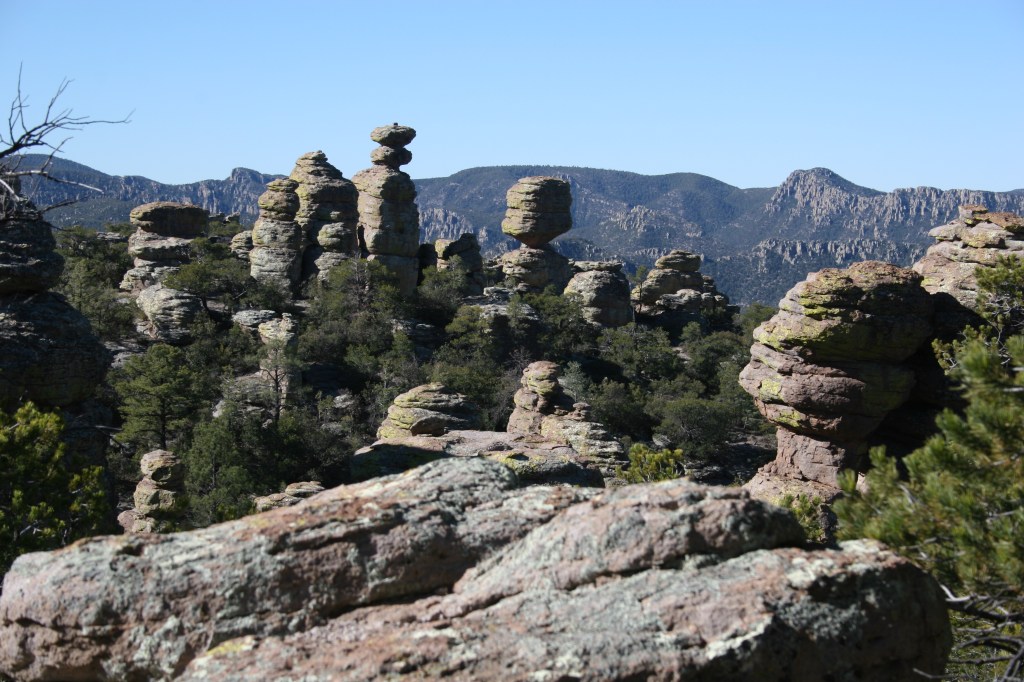
Chiricahua’s rock pinnacles were formed by a volcanic eruption 27 million years ago that ejected molten debris at supersonic speeds and formed a 12-mile caldera, according to the NPS. The ash and rock settled and compacted into rhyolite tuff, or silica-rich rock that is made from solidified volcanic ash that was vented from a volcanic eruption, deposited, and solidified.
The site also sits at the confluence of four major biomes of the Sierra Madre, Rocky Mountain, Chihuahuan Desert, and Sonoran Desert, with exceptional biodiversity, according to the NPS. About 86 percent of the park is protected wilderness.
National parks are created through acts of Congress whereas national monuments are named by presidents. The current administration asserts that the executive branch also has power under the Antiquities Act to remove areas from protection, as illustrated by its efforts to shrink the protected areas for Bears Ears and Grand Staircase-Escalante national monuments in Utah.
The view from the Heart of Rocks Loop at Chiricahua National Monument/Courtesy of NPS