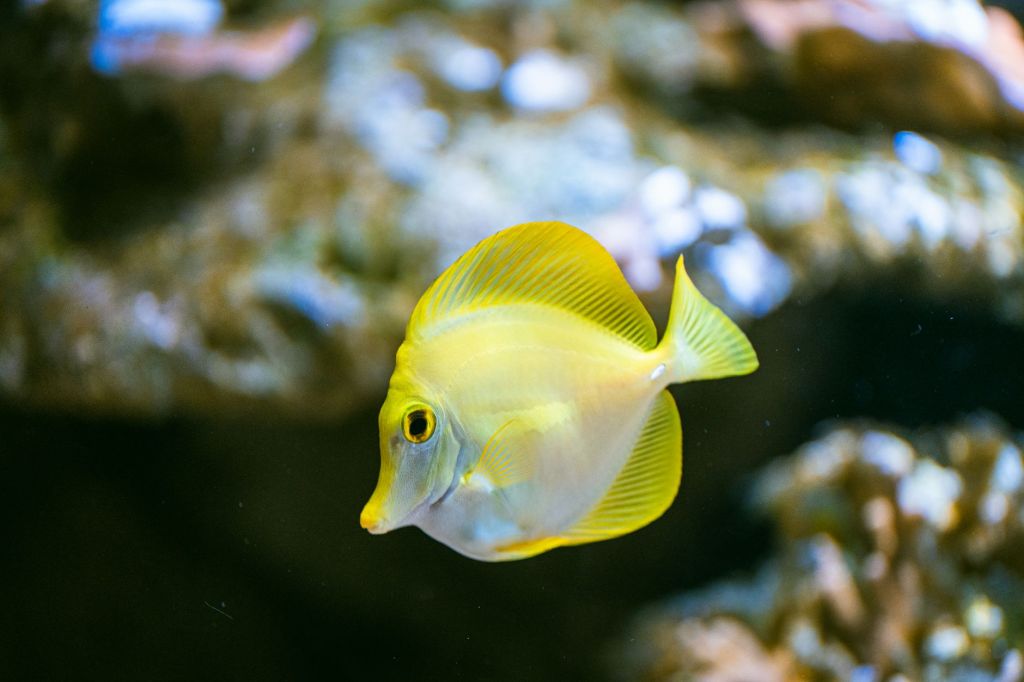
Environmental law nonprofit Earthjustice said that Hawaii’s state government has rejected a proposal to allow aquarium fish collection in the state’s reefs, a practice that was halted to protect marine life.
Earthjustice noted that commercial aquarium fish collection has been banned in western Hawaii since 2017 and statewide since 2021 to allow the recovery of certain fish species and reefs that had been stressed by heat waves, pollution, and commercial extraction.
Commercial aquarium fish sellers had sought a return to a permit-based system for catching fish off Hawaii’s shores, but the Hawaii Board of Land and Natural Resources voted on Friday to reject that proposal. Earthjustice’s attorneys had represented advocates who argued against resumed permitting.
—
The Associated Press reported today that US Forest Service researchers are collaborating with The Nature Conservancy Vermont on the selective breeding of American elm trees that are resistant to Dutch elm disease. The news service reported that seeds from the breeding program’s trees will be used to repopulate forests, riverbanks, and neighborhoods.
Dutch elm disease is caused by an infection with the fungal pathogens Ophiostoma ulmi and O. novo-ulmi. It was first identified in the US during the 1930s, likely introduced through logs shipped from Europe. USFS researchers have been working for years to identify disease-resistant elms.
—
Georgia’s Department of Natural Resources plans to add more than 100 species of rare animals and plants to its protected species list, to a new total of 423 species.
The proposed additions are comprised of dozens of plants, invertebrates, birds, amphibians, fishes, mammals, and reptiles. Adding a species to the list identifies it as among those that are in the greatest need of conservation and prohibits intentional harm of those animals or the destruction of their habitat on public lands.
The state said on its website that saltmarsh sparrow populations, for example, are some of the most rapidly declining among bird species in the eastern US. They overwinter on the Georgia coast, and their habitat is threatened by flooding and marsh fragmentation. Adding them to the protected species list will make it a priority to monitor the birds and conserve or enhance their habitat.
Some animals are being considered for removal as well, the state said. Gray bats remain endangered but the state has reached its recovery goals for the animals over the past 20 years and it plans to continue conservation efforts after delisting.
The Center for Biological Diversity separately said that Georgia is one of the country’s most biologically diverse states, and it hopes that other states follow Georgia’s lead in prioritizing conservation. The organization said, though, that the proposal would remove 51 species from the protected species list and does not add certain animals that have had widespread population declines such as the American horseshoe crab, short-billed dowitcher, and ruddy turnstone.
—
The National Park Foundation announced today $6.9 million in grant funding to provide housing for workers at 16 national parks.
The nonprofit said that the money will provide accessible, affordable housing for park rangers, other staff, volunteers, and partners. Examples of the grant-funded projects include the development of four housing units at Grand Canyon National Park’s South Rim, the renovation of a historic home at Point Reyes National Seashore, the design of three duplex housing units at Little River Canyon National Preserve, and the reservation of eight homes in a Montana housing development near Yellowstone National Park to provide affordable housing for NPS employees.
The foundation awarded $5.7 million last year to support projects that included the addition of housing for 65 people, and the organization noted that it has contributed to separate projects such as the construction of 70 modular housing units for rangers at Yellowstone National Park and housing for seasonal employees at Acadia National Park.
 Treelines